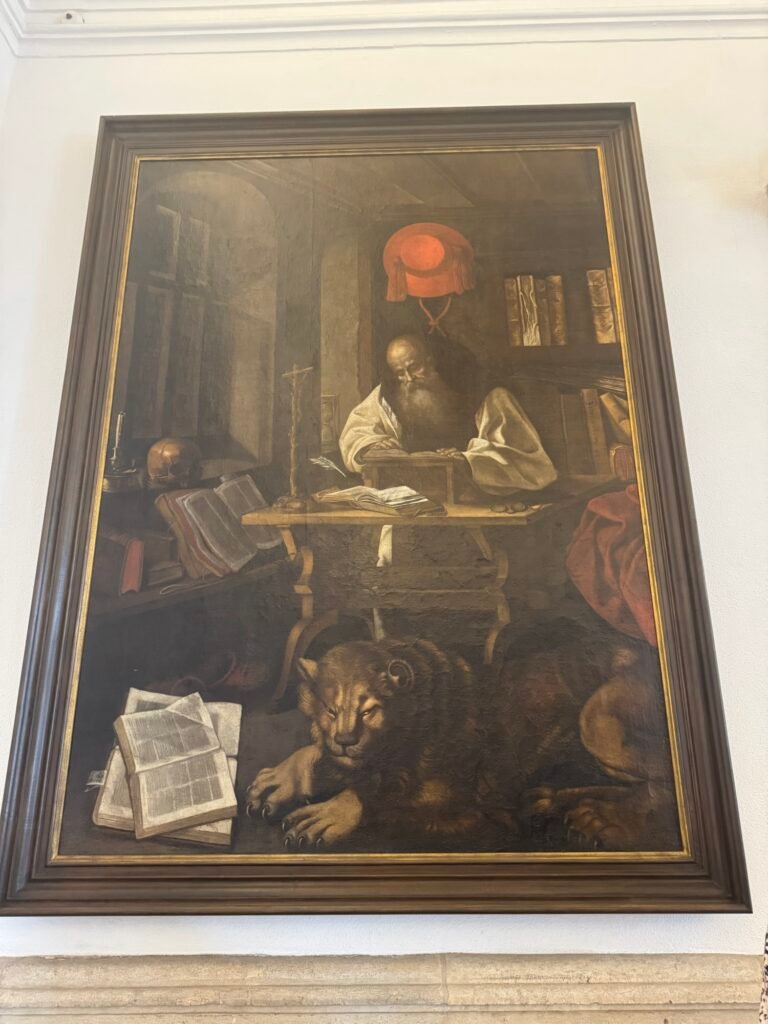
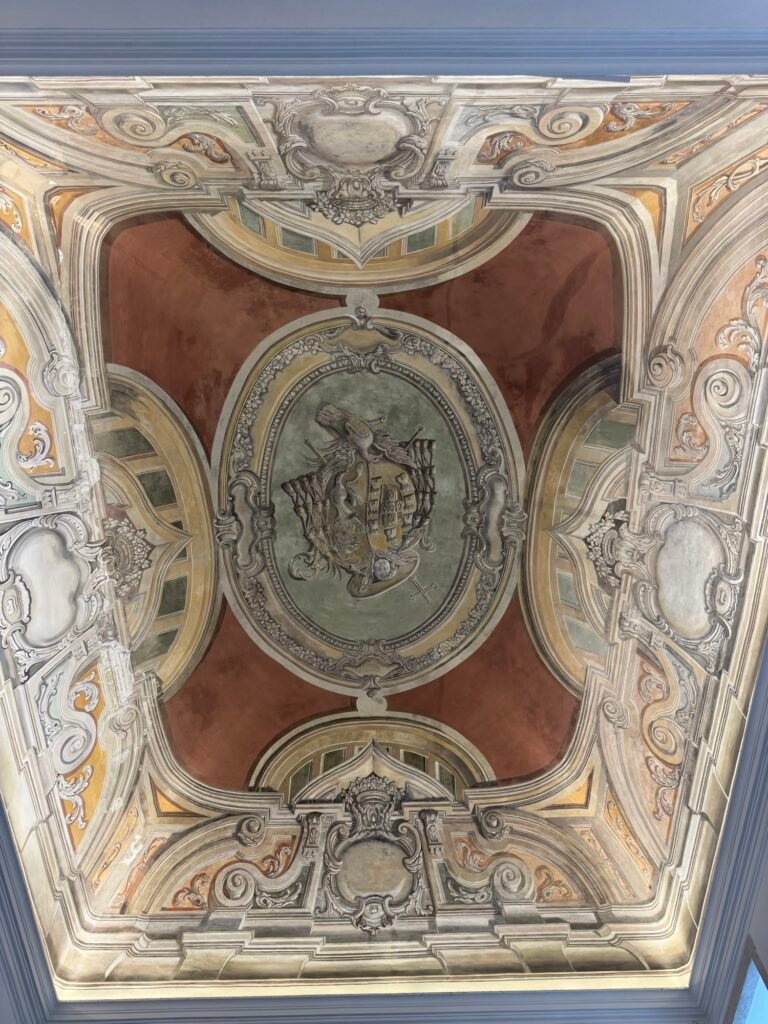
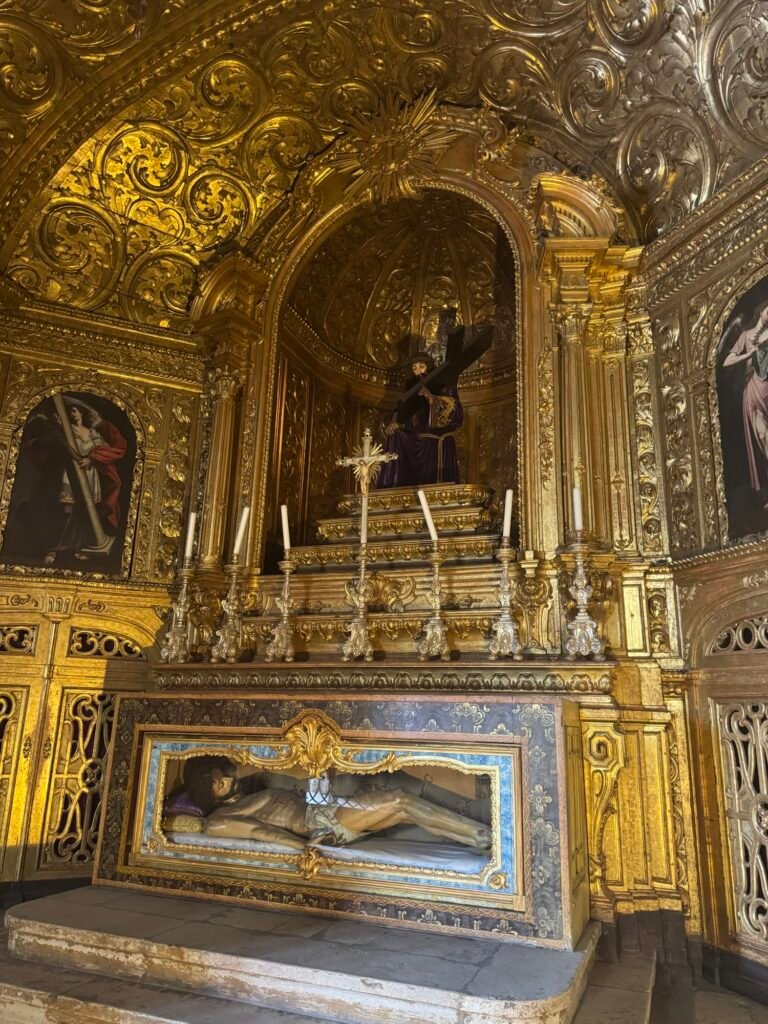
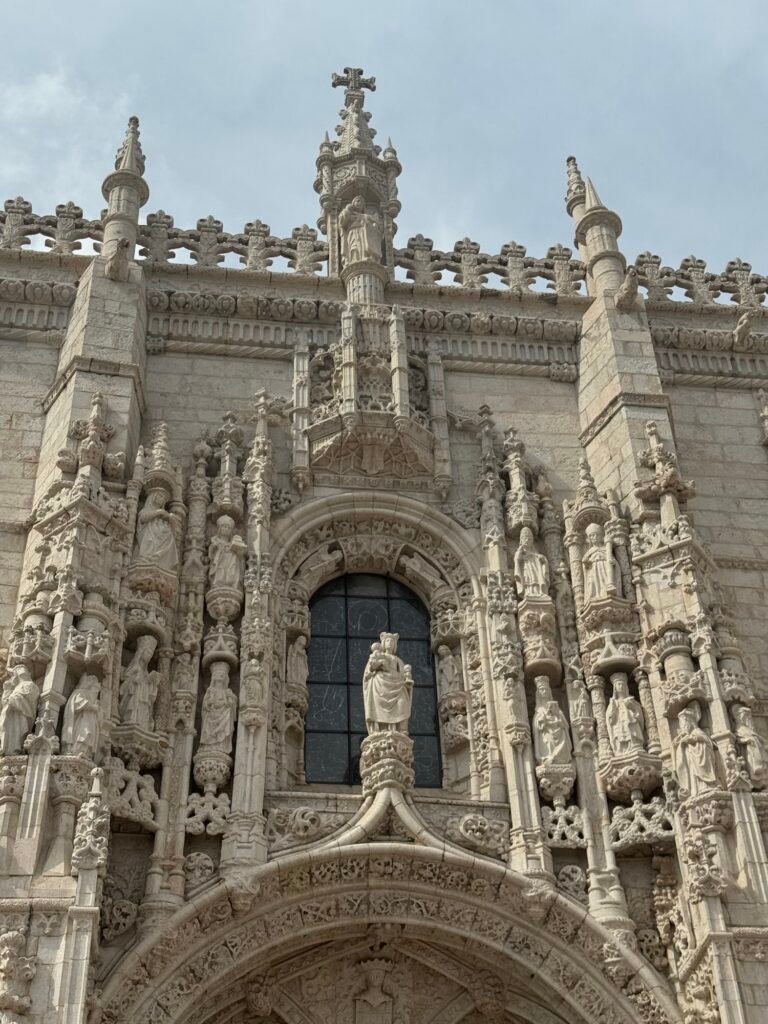
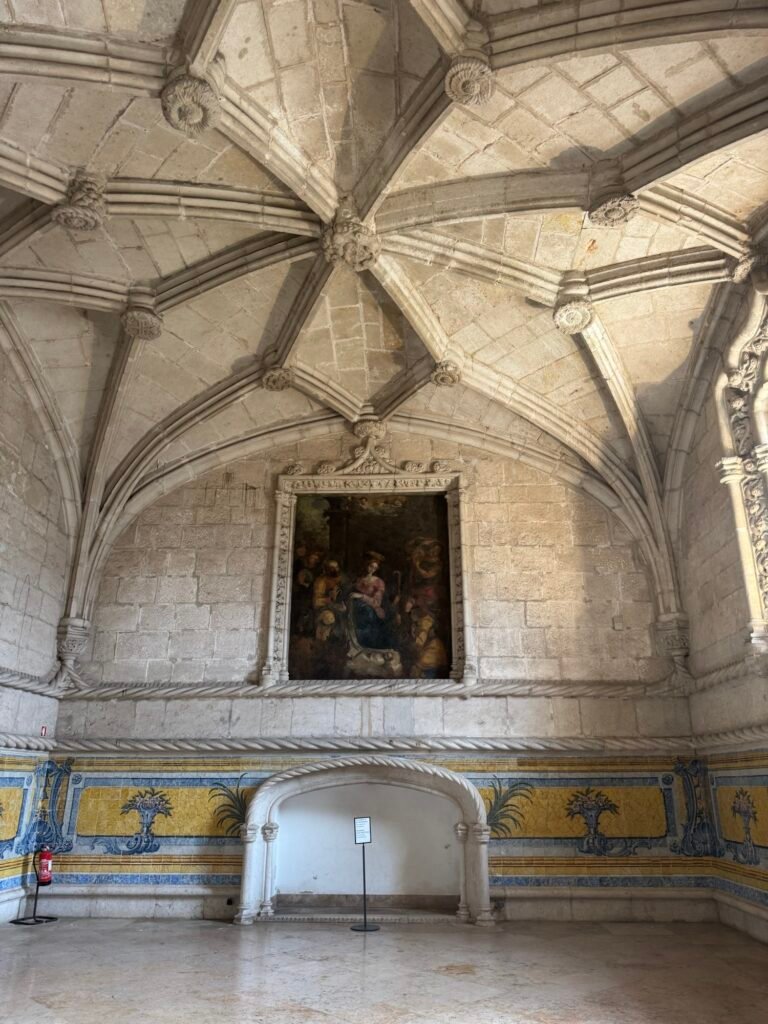
I was looking to fill my afternoon with history while visiting Lisbon and Jerónimos Monastery, better known locally as Mosteiro dos Jerónimos, did not disappoint. Set in the riverside district of Belém, this UNESCO World Heritage site isn’t just a beautiful designed place of worship, it’s a storybook carved in stone, telling tales of explorers, faith, and Portugal’s Age of Discoveries.
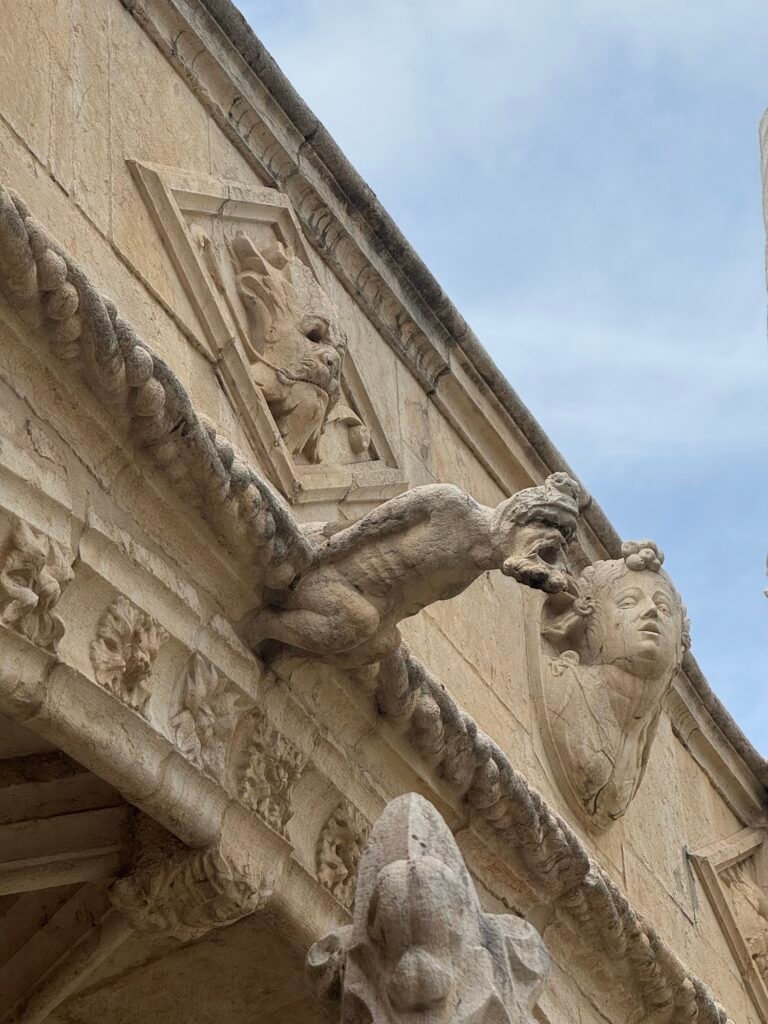
I would like to say I was a good tourist who arrived early and bought tickets ahead but alas, I was not. I arrived via Bolt from my hostel in downtown Lisbon in the middle of the afternoon. Thankfully the brutal summer sun took a vacation so the weather was pleasant while waiting in the long queue. The monastery’s pale limestone façade stretches wide, ornate without being overwhelming, like lace turned to architecture. At a closer look, I realize the carvings were seashells and other aquatic items that seem to blend in with the whole structure.
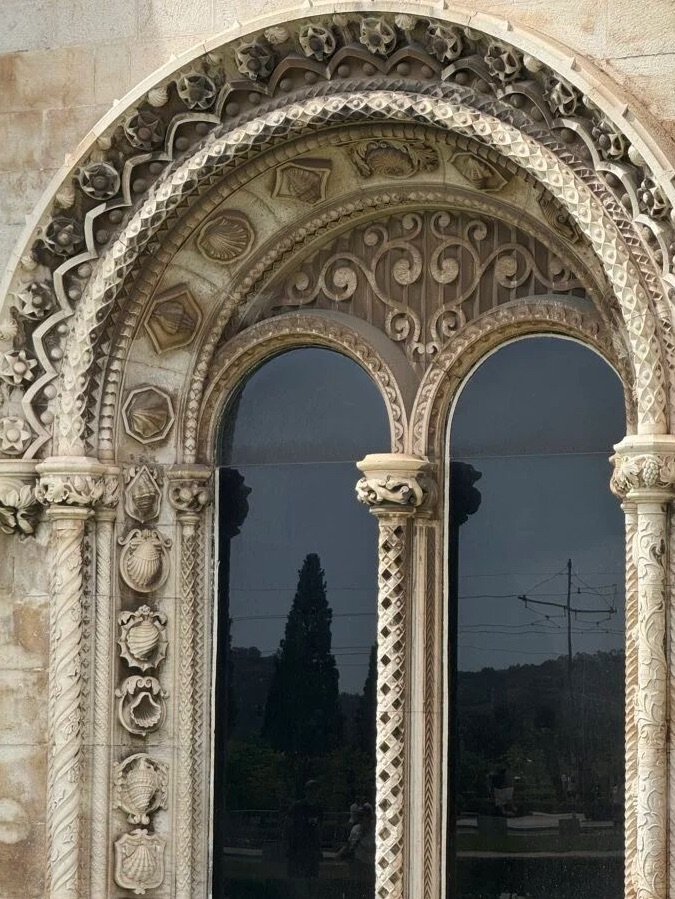
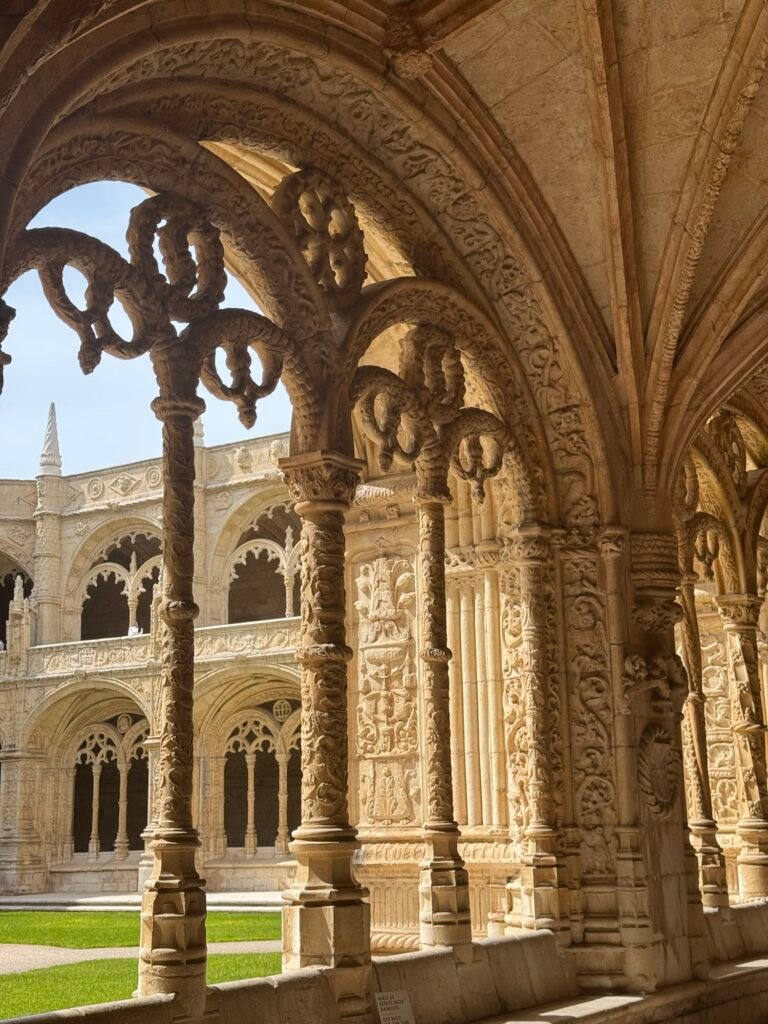
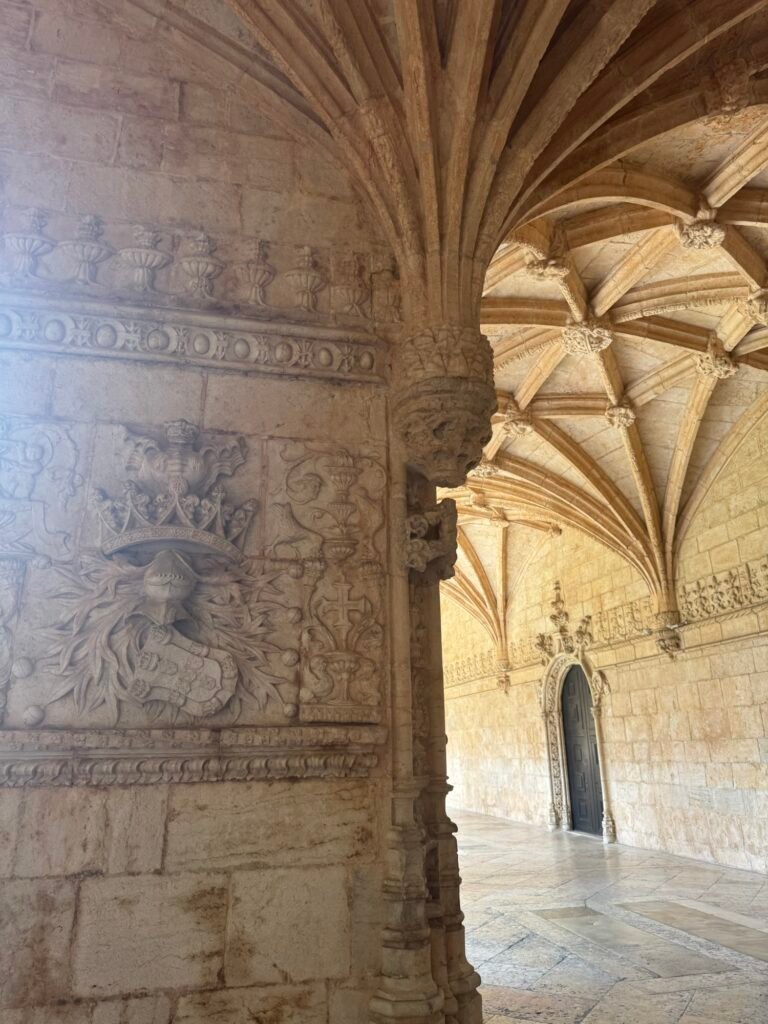
Built in the early 16th century under King Manuel I, the monastery was funded by wealth flowing in from overseas trade. That prosperity shows in every detail. This is Manueline architecture at its finest: maritime motifs, twisted ropes, coral-like carvings, and symbols of Portugal’s seafaring ambition worked delicately into stone. After paying the $20ish dollar entrance fee, I was excited for a day of quiet reflection.
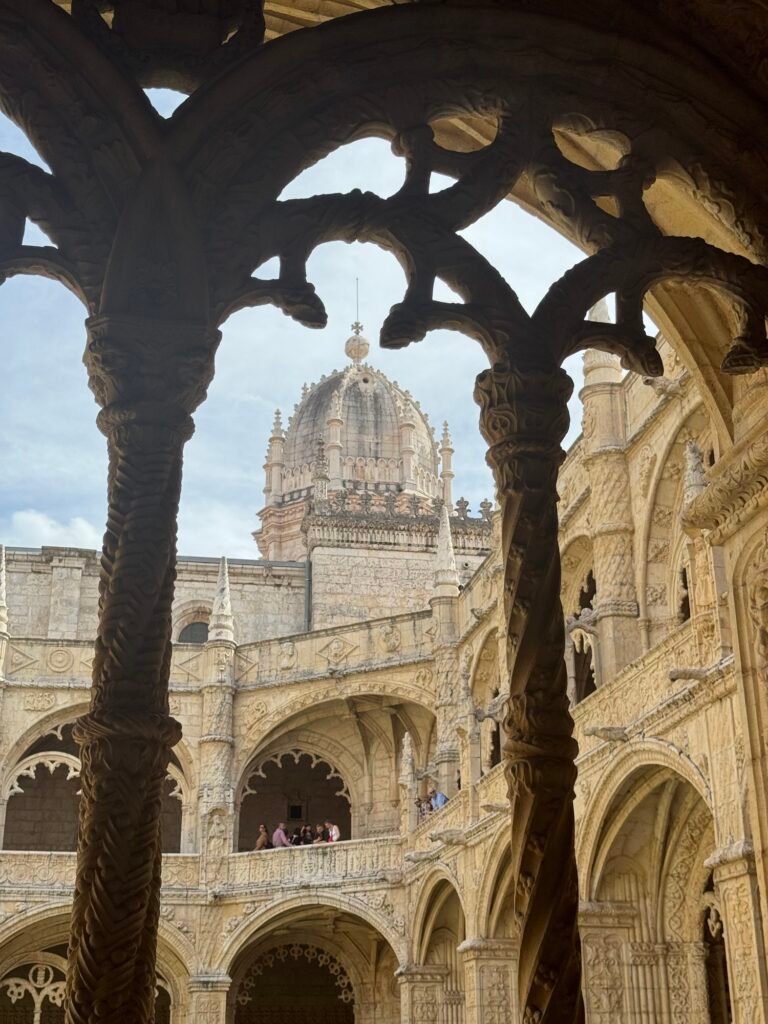
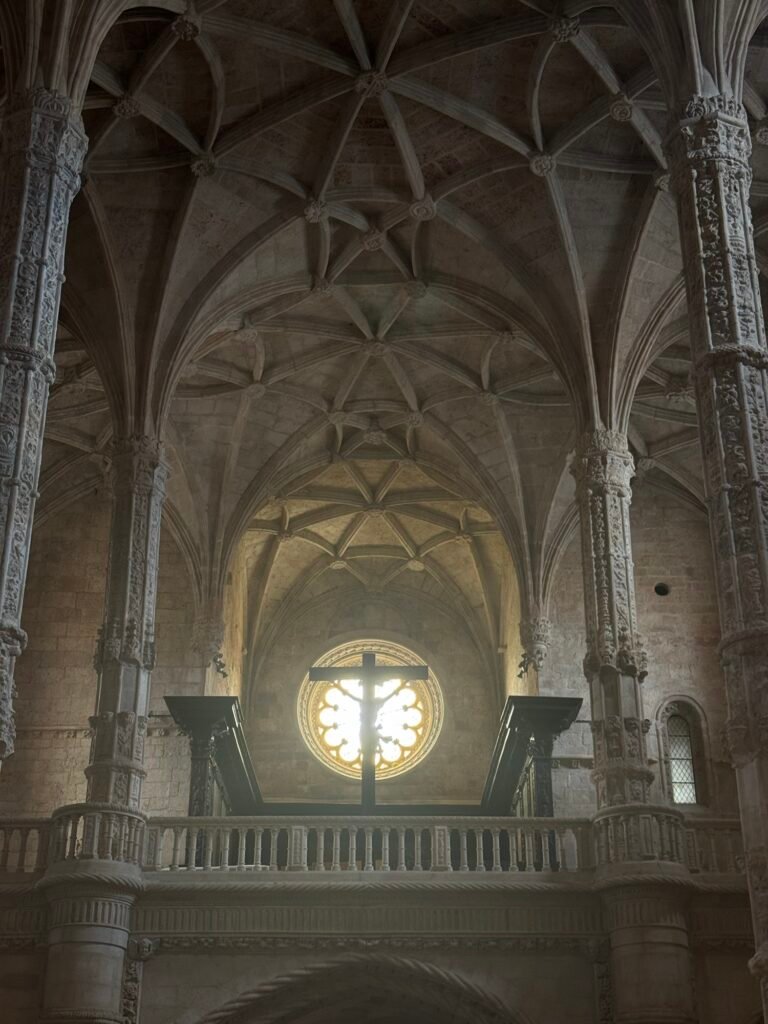
Entering the space opens suddenly into a tall, bright, and surprisingly airy atmosphere. Slender columns rise like palm trees, supporting vaulted ceilings that seem almost weightless. Two levels of intricately carved arcades surround a peaceful courtyard, where shadows shift slowly across stone. Every arch is different with either saints, nautical symbols, or botanical details that invite you to pause and look closer.Despite its size, the church feels calm, even intimate.
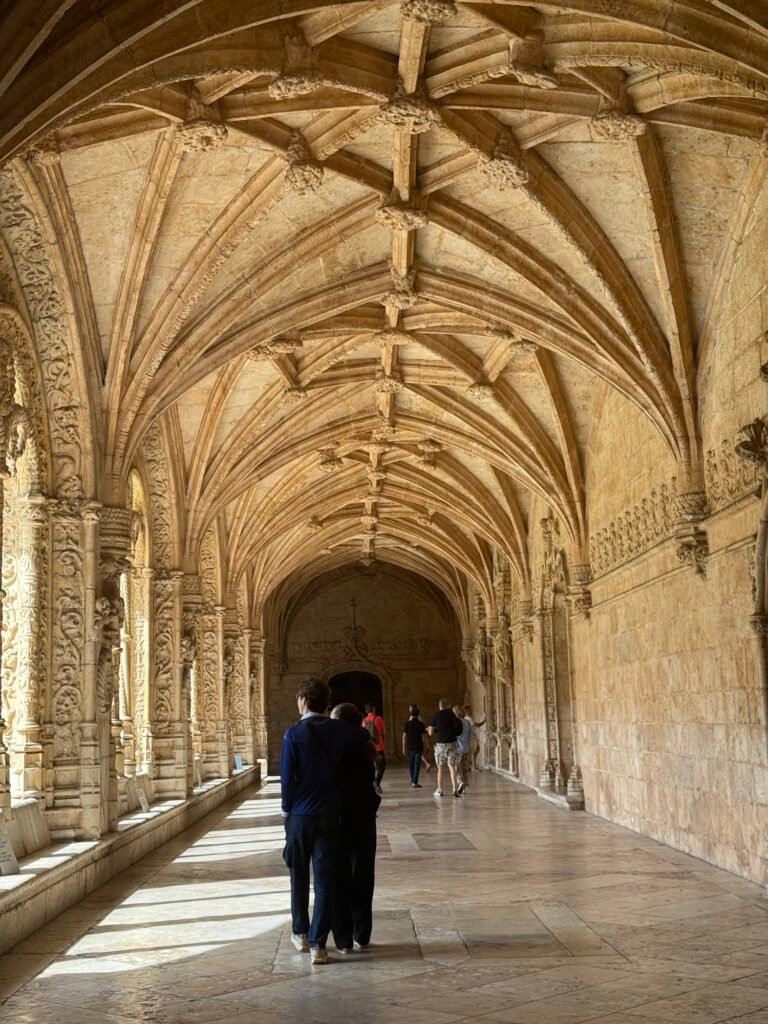
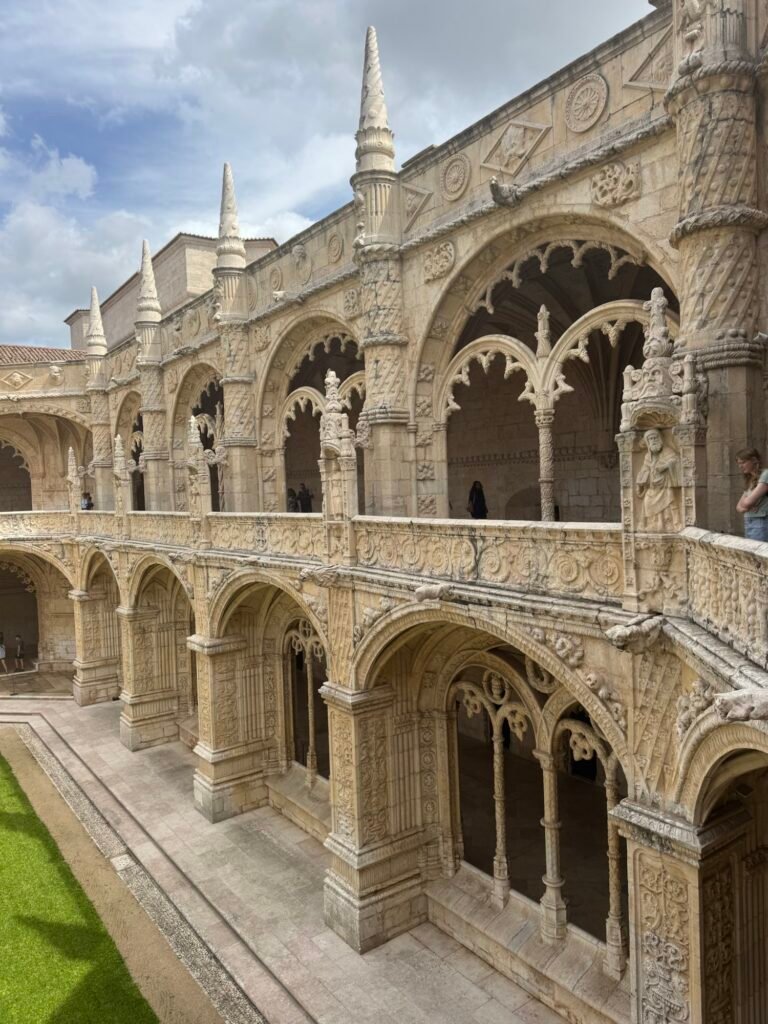
This was once a living, working monastery, home to Hieronymite monks whose role was to offer spiritual guidance to sailors. Today, it’s one of those rare places where silence still feels natural, even with visitors drifting through.
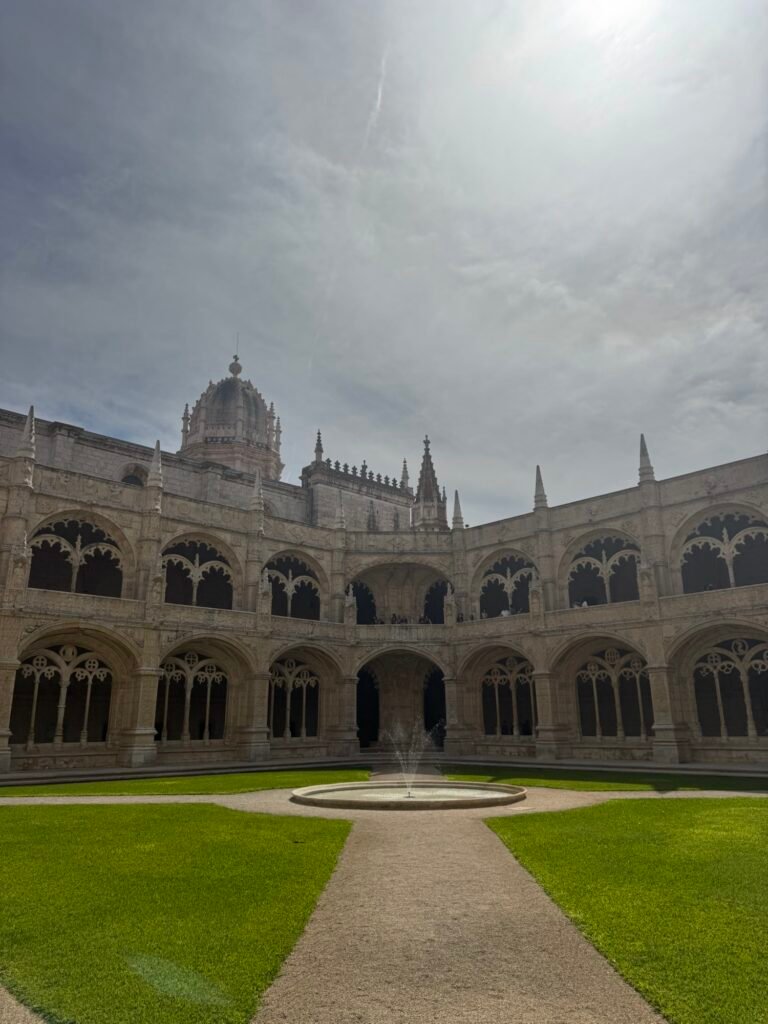
While exploring the grounds you will encounter tombs of many notable figures in Portuguese history:
- Vasco da Gama – Resting near the entrance of the Church of Santa Maria, the famed explorer’s tomb is one of the monastery’s highlights, symbolizing Portugal’s era of discovery and its global ambitions.
- King Manuel I – The monarch who commissioned Jerónimos Monastery is buried here, his tomb a reminder of the immense wealth and confidence Portugal enjoyed during the 16th century.
- King João III and Queen Catarina – Their tombs reflect the continuation of the Manueline legacy and the close bond between the monarchy and the church.
- Luís de Camões – Portugal’s national poet, author of Os Lusíadas, is commemorated here, linking literary heritage with maritime history.
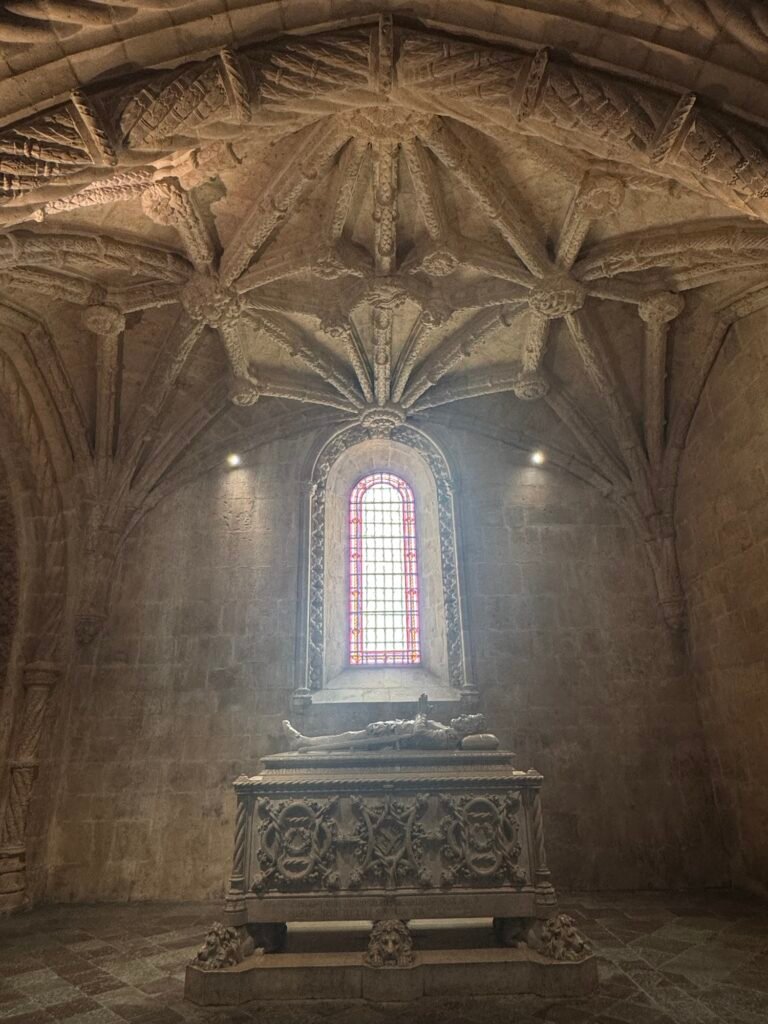
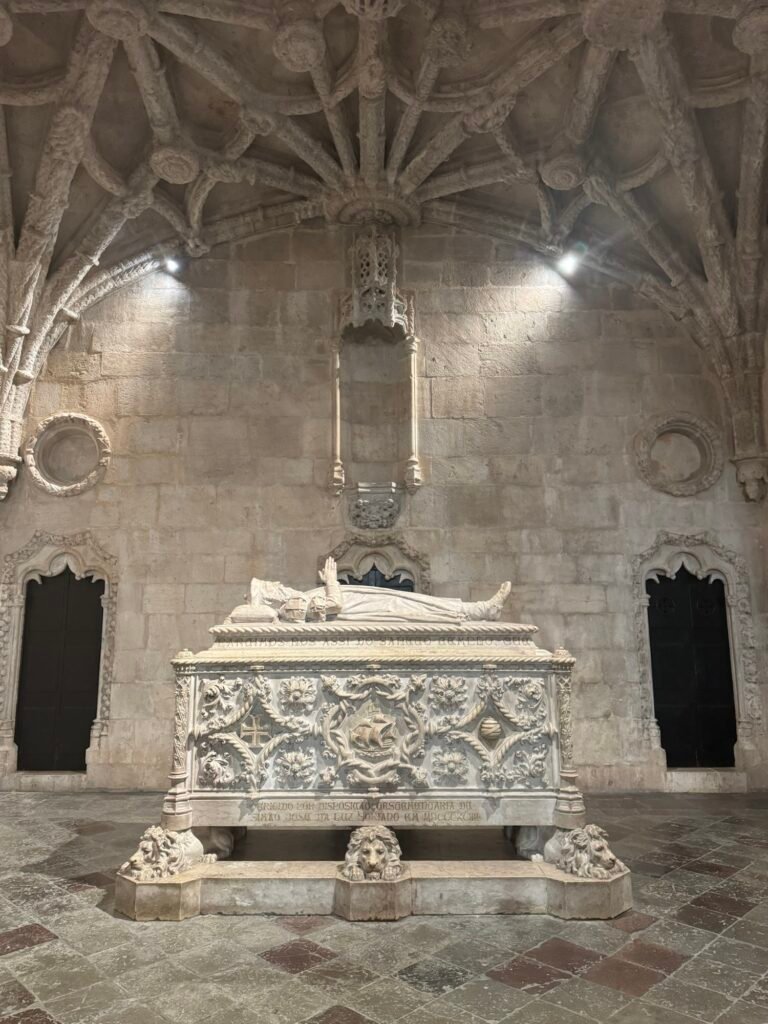
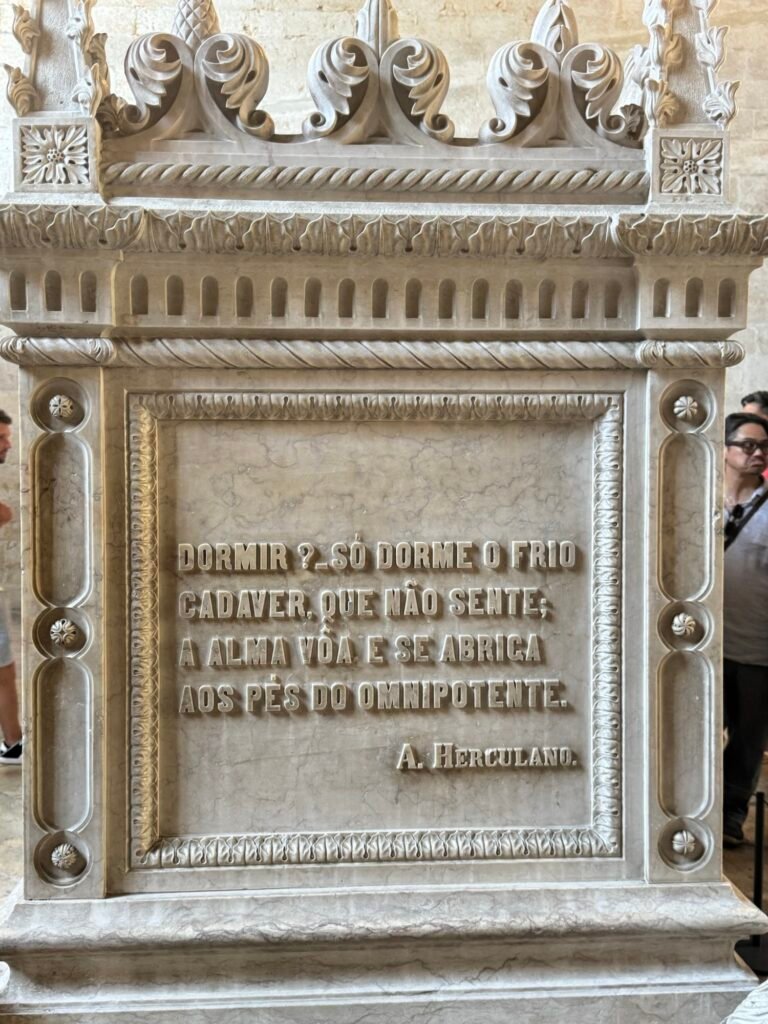
My favorite tomb is not in the list above. The lesser known tomb here belongs to Alexandre Herculano – one of Portugal’s greatest historians and Romantic writers. His tomb has a carved quote of his that will stay with me forever:
” “To sleep? Only the cold corpse sleeps, he who does not feel; the soul flies and finds shelter at the feet of the Omnipotent.”
Jerónimos Monastery isn’t just about grand architecture or historical importance. It’s about atmosphere. About standing in a place built at the edge of the known world, when the future arrived by ship and faith traveled hand in hand with exploration.
Practical Tips for Visiting
- Go early or late: Midday brings tour buses. Early morning or late afternoon offers a calmer experience.
- Buy tickets online to skip long queues, especially in peak season. I bought them at the door but you can buy them ahead on Viator.
- Combine your visit: Belém Tower and the Monument to the Discoveries are just a short walk away.